
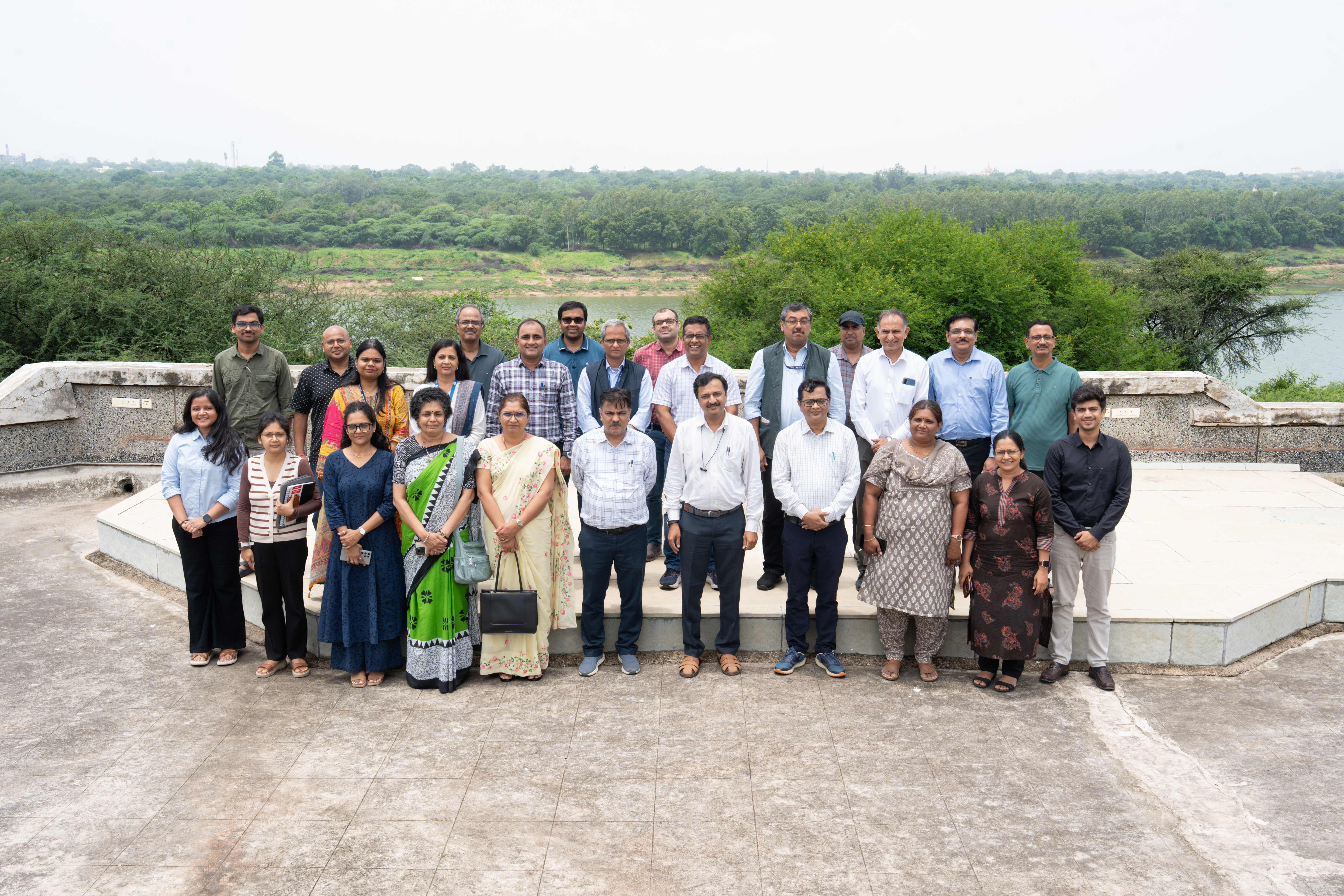
Gandhinagar, Aug 10: The Indian Institute of Technology Gandhinagar organised the Silicon and Advanced Semiconductor MAnufacturing Research and Training Hub – SAMARTH Pre-Launch Event on Saturday, August 8, 2026, with representatives from various universities and engineering institutions across Gujarat. The meeting served as a platform to exchange dialogue seeking their views on SAMARTH’s implementation framework and discuss how these institutions could engage with IITGN.
As a ₹190-crore initiative of the Ministry of Electronics and Information Technology, the Government of Gujarat, and IITGN, SAMARTH offers an integrated facility based on four pillars: workforce development, awareness, research and industry engagement for semiconductor manufacturing. While preparing students and technicians for semiconductor manufacturing, the Hub will also support technologies that can move from the laboratory to industry. Through hands-on training, advanced facilities, and partnerships among academia, industry, and government, this initiative aims to strengthen semiconductor education, research, and workforce development in India.
In his opening remarks, Prof Rajat Moona, Director of IITGN, explained,
“Semiconductors are the backbone of modern technology, from AI to mobility. As India and Gujarat build a globally competitive ecosystem, our success depends not only on fabrication but also on skilled talent, advanced research and strong industry partnerships. Aligned with the India Semiconductor Mission, SAMARTH will empower the next generation of innovators and build a strong manpower spanning across engineering, managers, working staff and the customer support necessary to make India a global leader in semiconductor technology.”
With an aim to train more than 10,000 students and technicians and upskill more than 1,000 industry professionals, SAMARTH’s outreach programmes will also introduce school and college students to semiconductor technology and careers in the sector.
As a step towards that direction, the proposed facility will include 1,200 square metres of ISO 5 to ISO 8 cleanrooms and around 40 process and characterisation tools, while IITGN’s existing facilities for device and process design, modelling, IC design, prototyping and characterisation will also support SAMARTH’s activities.
Presenting the plans for the Hub, Prof Nihar Ranjan Mohapatra, Professor of IITGN’s Electrical Engineering Department, elaborated on how the intended training programmes will cater to engineering students, polytechnic and ITI students, working professionals and school students. They will include coursework, practical training, internships, certificate programmes, faculty development and awareness activities.
During the interaction, representatives discussed important aspects such as course duration and schedule, student eligibility, credit recognition, selection for practical training, faculty participation or access to facilities. They recommended identifying the strengths of each partner institute in order to determine their role and contribution in implementation. In addition, they highlighted the importance of enabling student exposure, early on in their academic life. Several institutions also expressed interest in hosting short workshops, adopting SAMARTH modules, nominating students, faculty training or joint research, and sensitisation programmes to spread awareness about SAMARTH amongst students and faculty.
“Partner institutions are central to SAMARTH’s planning. They understand their students, curriculum requirements and training gaps. The inputs received today will help us refine course delivery and better connect practical training at IITGN with prerequisite learning and co-guidance at partner institutions,” said Professor Mohapatra.
The partnership framework will include train-the-trainer programmes, jointly developed course modules, student internships, joint supervision and collaborative research. It will also provide partner institutions access to SAMARTH’s nano fabrication facilities for research, device prototyping, manufacturing intelligence, indigenous equipment & software and joint technology development projects.
The meeting concluded with a suggestion for a common course curriculum and consensus among all the participating institutions of SAMARTH as a starting point. IITGN will use the suggestions received to refine SAMARTH’s programmes prior to its formal launch.
As the initiative evolves, SAMARTH aims to strengthen research and innovation, and contribute to India's vision of an Atmanirbhar Bharat.